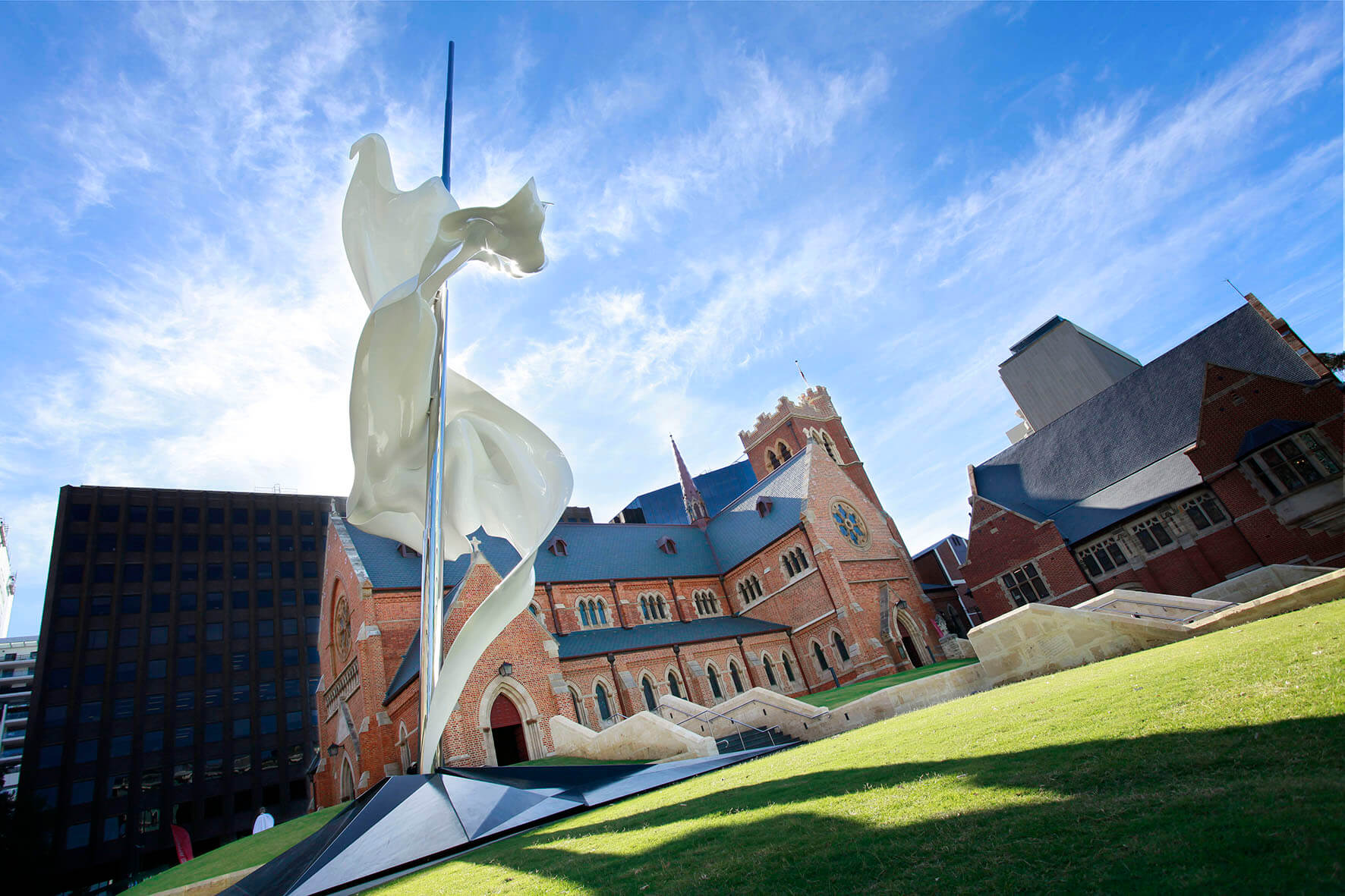


BUILDING HISTORY
Construction of the St George’s Cathedral began in 1879, being completed and consecrated in 1888. The design was shaped by the architectural vision of Edmund Thomas Blacket, showcasing his mastery of the Victorian Academic / Gothic Revival style with its intricate brickwork and stone trimmings sourced from local materials, with some unique flourishes from the UK and Europe.
ARCHITECTURAL PRESTIGE
Born in England, Edmund Blacket came to Australia in 1842, becoming a respected architect in New South Wales. In 1878, he was approached to design a new cathedral, which would become his only work in Western Australia. Blacket passed away in 1883, before the cathedral was finished.
He originally planned to use New Zealand Kauri for the ceiling but was persuaded to use local Jarrah instead. This required an innovative approach: the Jarrah was submerged in the Swan River for two years to soften it for bending and carving.
THE PROJECT CONTINUES
After Blacket's death, his sons continued his architectural legacy. Cyril Blacket joining the firm and contributing to the completion of ongoing projects.
The Cathedral underwent several modifications in the early twentieth century, including the addition of the square castellated bell tower — designed by Talbot Hobbs — in 1902 to commemerate the passing of Queen Victoria.
BURT MEMORIAL HALL
Septimus Burt (1847-1919), lawyer, politician and grazier, donated the The Burt Memorial Hall, dedicated in memory of Theodore and Francis Burt who died in World War I.
The Soldiers’ Memorial Chapel is built of Donnybrook stone and brick and was completed in 1923.


